
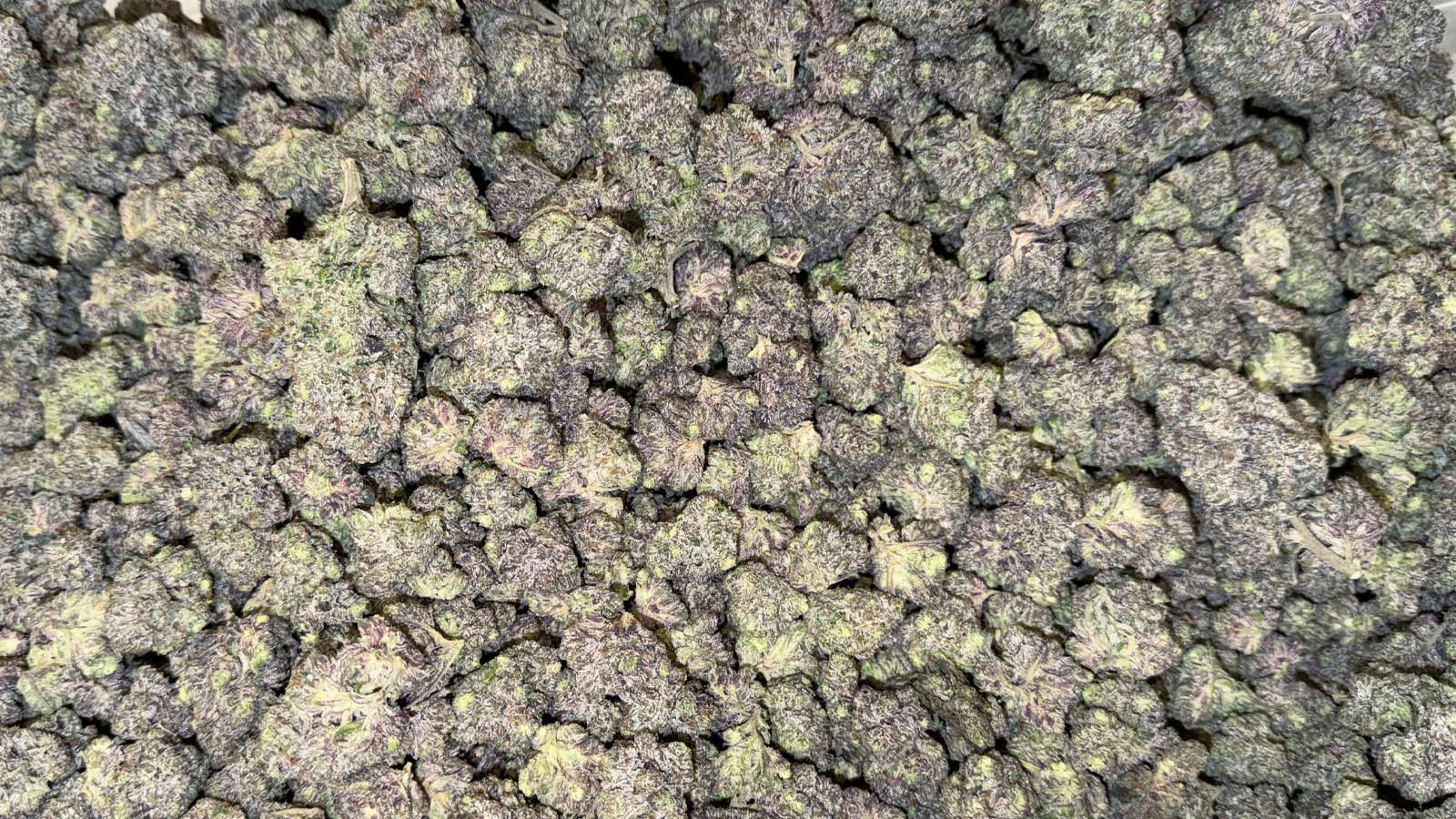
Cannabis Post-Harvest Processing: Variability Isn't a Trimming Problem, It's a Margin Problem
Every cannabis producer deals with variability. Most operations still apply a one-size-fits-all post-harvest process. The cost is real, recurring, and hidden.
What is post-harvest variability costing cannabis producers?
Cannabis post-harvest processing is full of variability. Greenhouse swings, room-to-room dry-down differences, cultivar behavior, bud-to-bud variation. Most operations still treat every flower the same way. That mismatch is one of the largest hidden sources of margin loss in cannabis production, and the producers who win the next stage will be the ones whose process adapts to flower condition instead of absorbing the cost, which at scale typically runs into the tens of millions of dollars annually.
Every producer deals with variability. Greenhouse and outdoor teams see it in seasonal swings, environmental shifts, humidity, temperature, airflow, moisture content, and harvest timing. Indoor teams see it in room-to-room differences, dry-down inconsistencies, and batch timing. Craft producers and hand-trim operations see it in variation within a single batch and in cultivar behavior.
The issue is not that cannabis is variable. The issue is that many post-harvest processes are not built to actively respond to that variability. The post-harvest line is often designed as a one-size-fits-all path and applied uniformly to flower that arrives in a different condition every time.
For strategic leaders, this matters because variability is usually treated as a production reality. In practice, it is also one of the largest hidden sources of margin loss, quality inconsistency, and operational drag. The opportunity is not simply to trim better. It is to build a post-harvest process that adapts before value is lost.
The mismatch: variable flower, fixed process
Post-harvest is an interconnected system. Drying, curing, bucking, trimming, sorting, handling, and packaging all influence one another. When environmental conditions shift, flower condition changes. When flower condition changes, the process requirements change with it.
This is especially visible in trimming and sorting. A batch that is slightly drier behaves very differently from one with more retained moisture. Dense flower needs a different level of trimming contact than a lighter, airier structure. Fragile flower requires more controlled handling. Heavier flower tolerates a more assertive process.
Whether a producer uses machines, hand crews, or a hybrid workflow, the same operating question exists: does the process change when the flower changes?
In many facilities, the answer is still no. The same equipment, the same handling path, the same trimming expectation, and the same labor model get applied across flower that changes batch to batch and bud to bud.
The result is predictable. Some flowers receive too much, some receive too little, and only a portion receive what they actually need. That mismatch creates hidden losses across the operation: excess handling, inconsistent finished product, rework, under-trimming, over-trimming, labor pressure, reduced throughput, and lost value at the final stage before flower becomes packaged, sellable inventory.
The two common responses, and why both fall short
Most producers respond to post-harvest variability in one of two ways.
The first response is to absorb the loss. The team knows certain batches will be more difficult. They know some flowers will come out better than others. They know seasonal and environmental conditions will affect performance. But because the workflow is not designed to adapt, the loss becomes normalized. It turns into part of the cost structure, even when no one is measuring it that way.
The second response is to slow or soften everything. Producers add more hand touches, reduce mechanical interaction, use gentler tools, lower throughput expectations, increase upstream or downstream costs, or move work into more labor-heavy steps. This feels like a solution, but it usually relocates the loss rather than eliminating it. The process feels safer. The economic cost stays in the P&L.
In both responses, the root issue is unsolved. One approach accepts variability as unavoidable loss. The other reduces process effectiveness to avoid confronting variability directly. Neither turns variability into an advantage.
This is where craft and hand-trim producers can misread the issue. The question is not whether the operation is automated. The question is whether the process is adaptive. A hand-trim room can still lose margin if every flower enters the same labor model. Industry data suggests hand-trim labor cost varies by $20 to $30 per pound depending on flower condition. A craft producer can still overpay for A/B ratio loss and upstream and downstream cost if the workflow simply uses gentler dry-flower equipment without adapting to flower condition. A premium brand can still protect appearance while quietly giving away A/B ratio, labor efficiency, and margin.
The strategic shift: stop treating every flower the same
The more effective way to think about cannabis post-harvest optimization is simple: different flowers arrive in different conditions, and those conditions require different handling.
That principle applies at two levels.
At the macro level, flower condition changes across seasons, environments, rooms, harvests, and batches. Greenhouse and outdoor producers often experience larger swings, but indoor producers are not exempt. Even highly controlled environments produce variation.
At the micro level, variation exists within a single batch. No two flowers are exactly the same. Size, shape, density, structure, surface condition, fragility, and moisture profile all influence how each flower should move through the post-harvest process.
An optimized process does not pretend those differences do not exist. It identifies them, separates them where needed, and adjusts the path and handling accordingly. That is the difference between a fixed process and an adaptive one.
The future of post-harvest is process intelligence
The next stage of post-harvest performance will not be defined only by stronger machines, gentler handling, or larger labor teams. It will be defined by intelligence inside the process.
A truly optimized system should be able to assess flower condition, recognize meaningful differences, and support a more precise path toward package-ready flower. That may involve routing, sorting, trimming intensity, handling decisions, or quality-control feedback. The common thread is the same: the process becomes more aware of the product moving through it.
For a mostly manual operation, that may mean clearer flower-condition categories, smarter labor allocation, and fewer corrective touches. For an automated line, it may mean equipment that can recognize meaningful differences and adjust how product is handled. For a hybrid facility, it may mean using each resource at its best point in the workflow to create real value.
For executive teams, this distinction matters. Labor efficiency, product appearance, quality preservation, consistency, A/B ratios, and finished-goods value are not separate production metrics. They are margin drivers. When the post-harvest process becomes more adaptive, the business becomes more resilient to seasonal variation, batch inconsistency, and scaling pressure.
From variability to competitive advantage
At Twister Technologies, this is the problem we are focused on solving: helping producers move beyond one-size-fits-all post-harvest processing.
MARVEL AI uses AI-driven flower recognition to assess individual flowers and apply an adaptive path toward package-ready results. The point is not automation for its own sake. The point is to protect sellable value by building a process around the reality of cannabis production: every flower is different, and the most profitable systems are the ones that can respond to those differences.
For producers looking to protect quality, reduce hidden loss, improve efficiency, and increase overall margin, the opportunity is clear. Variability is already inside the operation. It is already shaping labor, quality, and finished-goods value. The only question is whether the business has a system to respond to it.
The producers who win the next stage of cannabis production will not be the ones with the strongest machines, the gentlest handling, the largest crews, or the most rigid SOPs. They will be the ones who can see variability clearly, respond to it consistently, and stop paying for the same hidden losses every harvest.
The future of post-harvest is not just automation. It is intelligent automation. For producers who continue treating variable flower with fixed processes, the cost will not stay hidden forever.
Frequently asked questions
What is post-harvest variability in cannabis production?
Post-harvest variability is the natural variation in flower condition that arrives at the trim and sort step. It shows up at two levels. The macro level covers seasonal, environmental, room-to-room, and batch-to-batch differences in moisture, density, and structure. The micro level is the variation within a single batch, where no two flowers are exactly the same in size, density, surface condition, or fragility.
Why do fixed post-harvest processes cost producers margin?
A fixed post-harvest process applies the same handling path, the same trimming intensity, and the same labor model to flower that arrives in different conditions every time. Some flowers get too much, some get too little, and only a portion get what they actually need. The result is excess handling, inconsistent finished product, rework, A/B ratio loss, and reduced throughput. The cost is real and recurring, but rarely tracked as a line item, which is why it stays hidden.
Does post-harvest variability only affect large or automated cannabis producers?
No. Variability affects every operation, including craft producers and hand-trim rooms. The question is not whether an operation is automated. The question is whether the process is adaptive. A hand-trim room can still lose margin if every flower enters the same labor model. A craft producer can still overpay for A/B ratio drift if the workflow uses gentler dry-flower equipment without adapting to flower condition.
What is the difference between automation and intelligent automation in cannabis post-harvest?
Standard automation applies a consistent mechanical process at scale. Intelligent automation adds the ability to assess flower condition, recognize meaningful differences, and adjust the handling path accordingly. The first reduces labor cost. The second reduces labor cost and the hidden losses that come from treating every flower the same way.
How does adaptive cannabis post-harvest processing protect A/B ratio?
A-bud loss most often happens when premium flower is handled the same way as flower that needs more aggressive processing. An adaptive system identifies ready-to-package flower early, separates it from flower that needs more work, and routes each stream to the handling path that protects its value. The premium portion is touched less. The portion that needs work gets the right amount of attention. A/B ratio improves because the process stops penalizing the best flower for the condition of the rest of the batch.
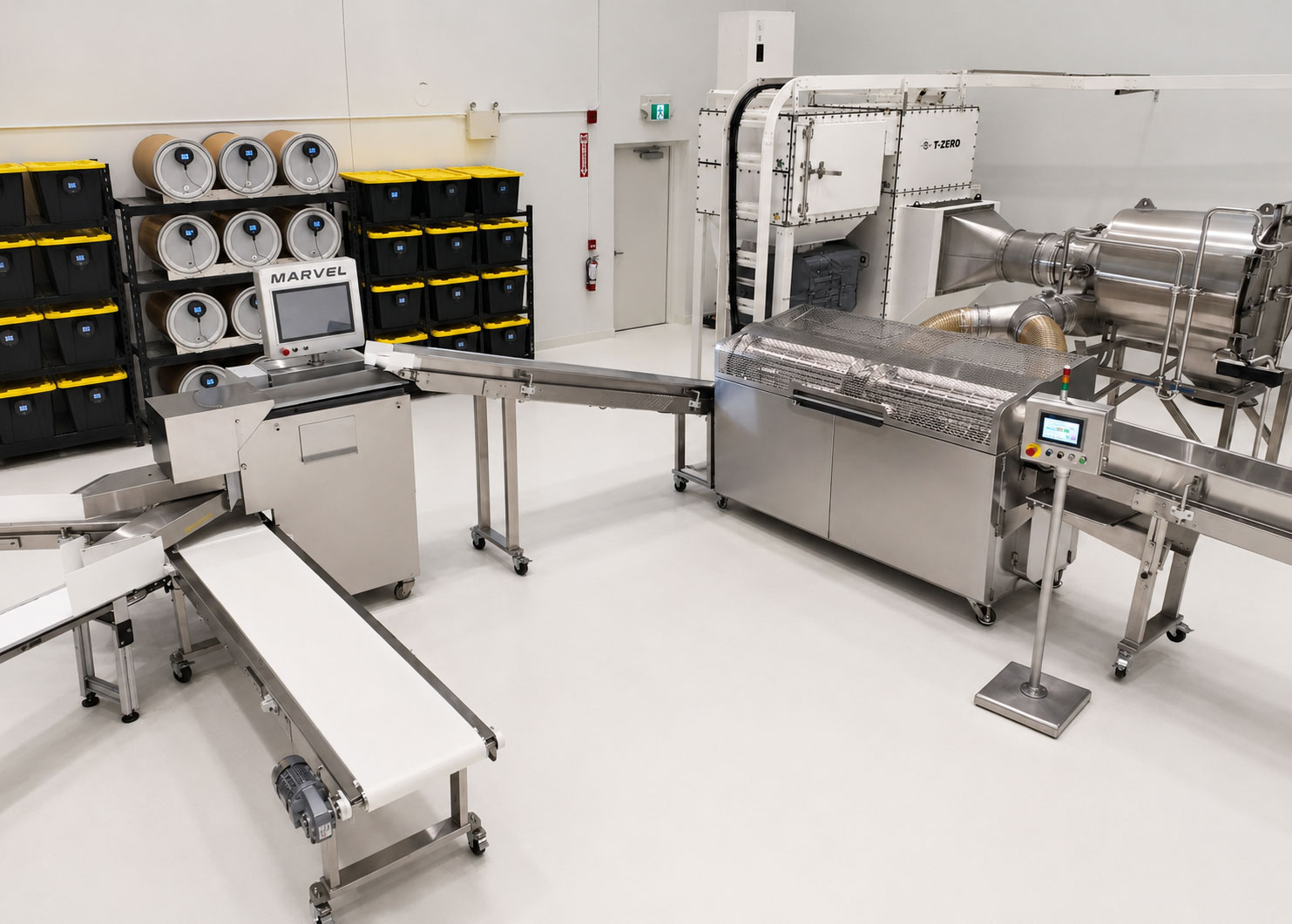
MARVEL AI assesses individual flowers and routes them adaptively, so every bud gets what it actually needs instead of what the rest of the batch needs.
Explore MARVEL AI