
Do Cannabis Trimmers Leave Metal in Your Flower?
A Look at Iron Levels in Real Lab Data

When people think about machine trimming, a common misconception has been metal shavings, or tiny pieces of steel, getting into the product.
Keirton’s engineers set out to debunk that myth on our equipment by looking for both physical debris and trace metals in cannabis run through a T-Zero PRO under various conditions.
This study walks through the key findings from testing, zooms in on iron (Fe) content, and puts the numbers in context by comparing them to other studies on cannabis, hops, and everyday foods.
How the Testing Was Done
The testing was split into three parts: a foreign material scan, an elemental composition of the blades, and an elemental composition of cannabis.
Test 1 – Foreign Material Scan
- Cannabis from a single lot and strain was trimmed either by hand (control sample) or with a T-Zero at three blade-contact settings: no blade contact, light blade contact, or heavy blade contact, with flower and trim collected at each setting.
- An independent lab looked for visible foreign material down to ~0.3–0.5 μm, including synthetic fibers and hard particles.
A quick take-away: this test found no stones, hard debris, or other material that would be considered metal shavings in any flower or trim sample.
So, if metal is getting in, it would have to show up as dissolved metal or ultra-fine particles detectable through chemistry, not as visible shavings. This led engineers to Test 2.
Test 2 — Elemental and Heavy-Metal Scan on Blade Samples
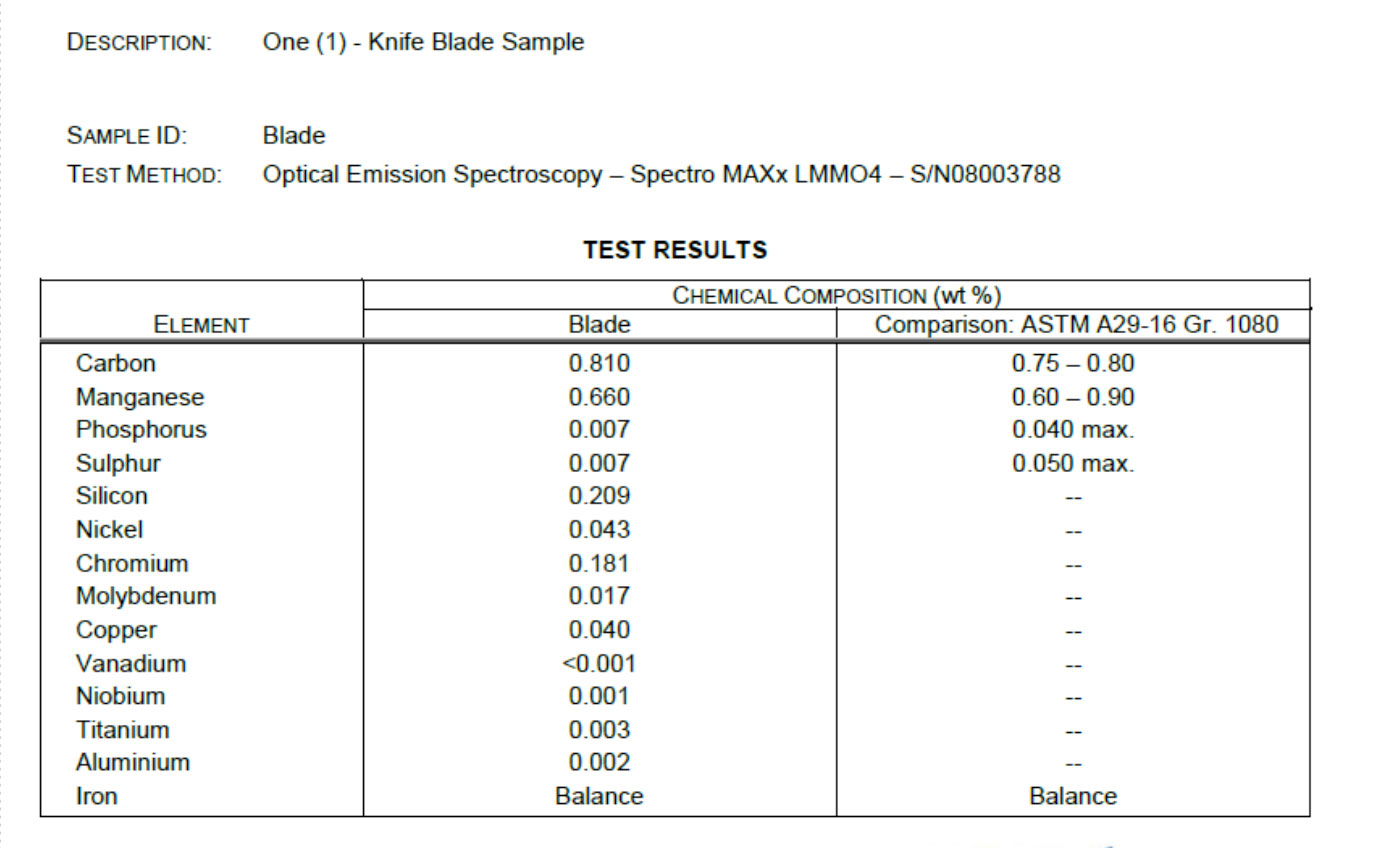
Samples of blade material were cut from a T-Zero bedknife and helix blade, and analyzed to confirm elemental composition.
- The lab results confirmed that the blades were made of an alloy that’s about 98% iron by weight, with small amounts of manganese, chromium, nickel, etc.
These results confirmed iron would be the best tracer element for any steel that may have shaved off into the product. If there were high amounts of iron in the product, it could indicate contamination from the blades.
Test 3 – Elemental and Heavy-Metal Scan on Cannabis
Ten samples were collected (both flower and trim, for hand vs. T-Zero with no blade contact, light blade contact, and heavy blade contact) and analyzed by a second independent lab using an EXPTM 555 elemental method with detection in the parts-per-billion range.
Flower Iron Levels (ppm)
| Condition | Iron (ppm) |
|---|---|
| Hand-trim flower (control) | 54.2 |
| Machine, no blade contact | 42.7 |
| Machine, no blade + brush contact | 39.7 |
| Machine, light blade contact | 73.6 |
| Machine, heavy blade contact | 44.8 |
| Coefficient of variation (flower) | ~24% |
In plain language:
- Flower iron ranged from ~40 to 74 ppm, with an average around 51 ppm.
- The sample-to-sample spread (coefficient of variation) is about 24%, which is within normal biological variation.
There is no evidence to suggest that the T-Zero introduces metal to the flower, or the existence of a “more blade contact = more iron” pattern. The highest iron in flower result does show up under light blade contact (73.6 ppm), but the iron level drops again under heavy contact (44.8 ppm) instead of continuing upward. These results are opposite what one would expect if the blades were steadily depositing metal as blade contact increased. In addition, the hand-trim flower showed higher levels of iron than the machine-trim sample with heavy blade contact.
Trim Iron Levels (ppm)
| Condition | Iron (ppm) |
|---|---|
| Hand-trim trim (control) | 38.6 |
| Machine, no blade contact | 99.4 |
| Machine, no blade + brush contact | 123.5 |
| Machine, light blade contact | 59.5 |
| Machine, heavy blade contact | 128.3 |
| Coefficient of variation (trim) | ~39% |
For Trim:
- Iron ranged from ~39 to 128 ppm, averaging ~90 ppm.
- Variation is bigger here (~39% coefficient of variation), still a reasonable amount of biological variation.
A quick take-away: there is no pattern of iron content increasing as blade contact increases.
We know that cannabis naturally accumulates metals from soil, water, fertilizers, and nutrients. We also know that iron is not mobile inside the plant, so different parts of the same plant can legitimately show different values. This is similar to cannabinoid content varying at different locations of the same plant.
Iron and Variability in Hops
To benchmark these cannabis numbers, they were compared to hops, a close botanical cousin to cannabis used in beer. Schmidt, Anderegg & Biendl (2003) measured metals in hops from multiple regions and varieties. In that work, the 2002 hop harvest found:
Hops Iron Benchmarks (ppm)
| Metric | Iron (ppm) |
|---|---|
| Mean Fe | 106 |
| Minimum Fe | 64 |
| Maximum Fe | 194 |
| Coefficient of variation | ~30% |
- Iron in the same order of magnitude as the T-Zero cannabis trim (tens to low hundreds of ppm).
- Natural variability of ~30%, similar to the 24–39% variation seen in the cannabis flower and trim samples.
In plain English: the range of iron content in any of the cannabis samples was aligned with the range of iron content in hops.
Required Iron in Cannabis Leaves and Flower
A controlled nutrient-disorder study on Cannabis sativa by Cockson, Landis, Smith, Hicks and Whipker (2019) found that:
- Iron-deficient leaves contained ~60 ppm.
- Control leaves had ~112 ppm.
- Published survey sufficiency ranges for cannabis leaves are ~100–150 ppm.
This shows that iron is naturally present in cannabis and is required to maintain plant health. Low iron content reduces chlorophyll and photosynthesis, stunting growth and yields.

Iron in Hemp Leaves and Flower
A study on macro and trace elements in hemp leaves and flower by Zafeiraki, Kasiotis, Nisianakis and Machera (2021) found that:
- Average iron content of flower and leaves ~400 ppm.
- Maximum iron content in one sample ~1,338 ppm.
Real-world plants can show anything from tens to over a thousand ppm depending on cultivar and environment.
Against the backdrop of these studies, the T-Zero flower (40–74 ppm) and trim (39–128 ppm) sit comfortably inside the ranges seen in hop, cannabis, and hemp.
Iron in Everyday Foods and Drinking Water
To make these numbers feel less abstract, it helps to compare them with foods people are familiar with and ingest regularly:
Iron in Familiar Foods (ppm)
| Food | Iron (ppm) |
|---|---|
| Cooked spinach (boiled, drained) | ~36 |
| Cooked lentils (boiled, no salt) | ~33 |
| Broccoli leaf | ~70 |
| Dried herbs and spices | ~1,236 |
| Wheat bran | ~185 |
| Cheerios | ~350 |
| Beef steak | ~26 |
The wide range of iron content in foods we eat demonstrates how common these numbers are within daily life.
Putting it All Together
Does the T-Zero trimmer contaminate cannabis with metal shavings? Here’s a quick summary of the results:
- No physical shavings were found. Visual and microscopic foreign-material testing saw no stones, hard debris, or metal-like fragments in any sample.
- Iron levels in flower and trim are modest and variable, but not blade-driven. Flower ranged ~40–74 ppm (avg ~51 ppm). Trim ranged ~39–128 ppm (avg ~90 ppm). The numbers bounce around but do not climb systematically as blade contact increases.
- Iron content variability matches what we see in other plants. Hops sit around 64–194 ppm Fe with ~30% variability, and independent cannabis/hemp studies show Fe from ~60 ppm up into the hundreds or more.
Based on this test report and the broader scientific context, there is not sufficient evidence to suggest that trimming with the T-Zero contaminates cannabis flower with metal shavings. The iron levels observed in flower and trim are consistent with normal plant-to-plant variability and comparable to agricultural products like hops and hemp, and they do not show a pattern that matches increasing blade contact.
So, do cannabis trimmers leave metal in your flower? The evidence points to no—these elemental traces of iron are consistent with normal biological iron levels, not mechanical contamination.
*Blade contact refers to the degree to which the blades are pressing against each other. The myth is that higher blade contact would produce more metal shavings.