
Hand Trim vs Machine Trim Cannabis: T-Zero PRO Tested on GMO Flower
A large Canadian LP ran hand-trimmed samples against the T-Zero PRO on one of the trickiest cultivars to trim. The yield gap is small, it was 3%. The labor delta is not.
A large Canadian LP recently ran side-by-side sample tests on one of their most difficult cultivars: GMO. The strain is notoriously tough to trim. It produces dense, chunky, irregular bud shapes packed with swollen calyxes, and the structure makes sugar leaves hard to remove without taking some of the bud along for the ride.
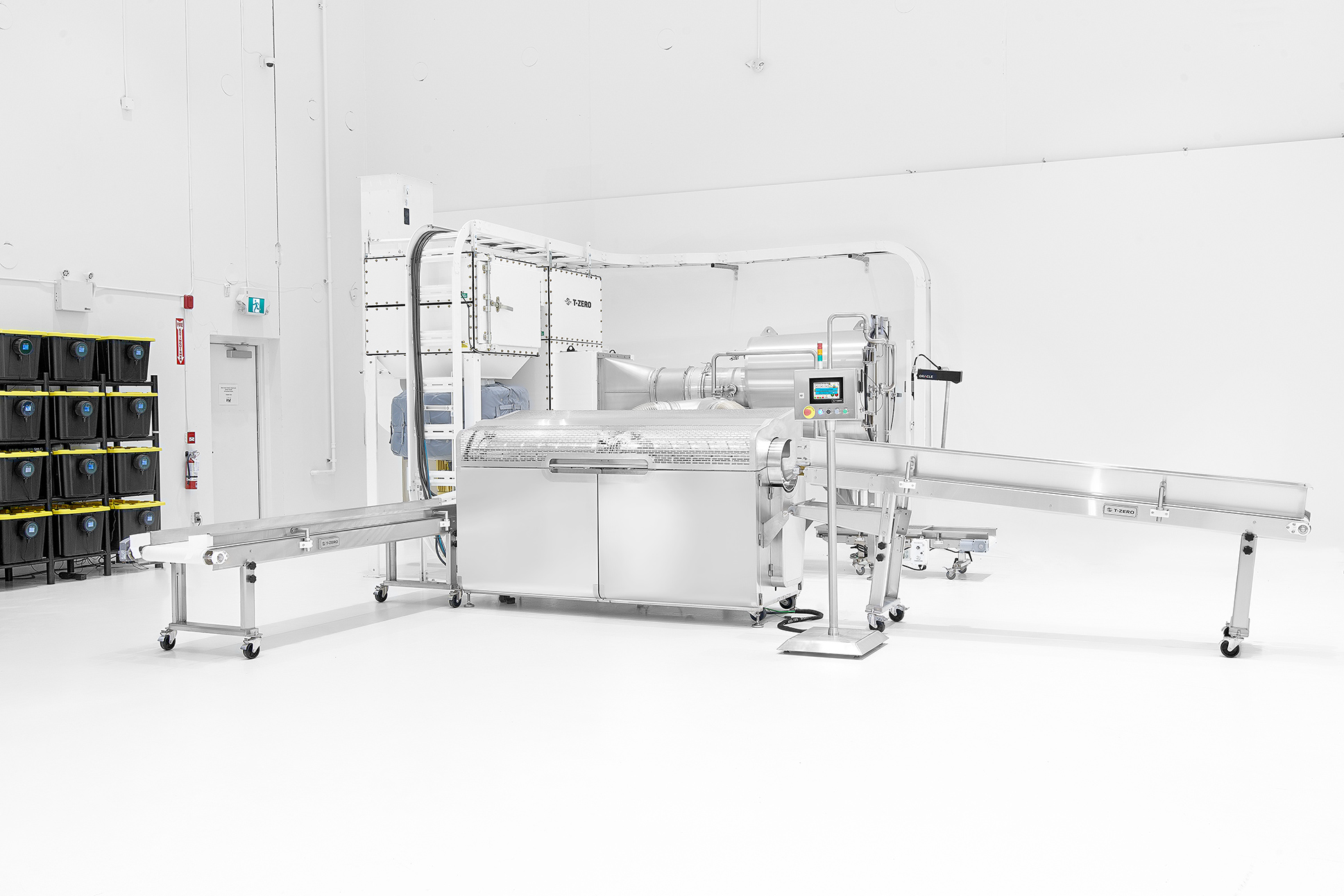
They compared hand-manicured samples to the Twister T-Zero PRO to see what actually changes when you introduce automation. The result: the T-Zero PRO delivered a hand-trim finish at commercial speed, while keeping yield and trichomes in a strong craft range.
What the GMO sample tests showed
Hand trim won the yield contest by 3 percentage points (75% vs 72% Grades A and B combined). The T-Zero PRO delivered a hand-trim visual finish on a notoriously hard cultivar, kept trichomes in a strong craft range, and cut labor cost from about $84/lb to about $0.84/lb. At 12,000 lbs per month, that nets out to roughly $862,920 in monthly advantage to the producer's bottom line, after the small yield-value gap is accounted for.
When you are pushing high volume, trimming stops being a finishing touch. It becomes an operational decision that affects yield, flower quality, labor cost, and how fast you can get product to market.

What was tested
The test scope was set up to isolate finished-flower outcomes on a cultivar that historically loses yield to over-trimming.
Cultivar
GMO. Dense, chunky, irregular buds with tightly packed swollen calyxes.
Sample sizes
- 3 hand-trimmed samples, ~0.5 kg each
- 3 T-Zero PRO samples, ~70 kg each
Measured
- Grade A (bigs, >1.5 cm / 0.6")
- Grade B (smalls, <1.5 cm / 0.6")
- Grade C (trim)
Inspected
- Finished flower quality
- Trim (byproduct) quality
Also considered
- Throughput
- Labor cost per pound
Reference benchmarks
Labor benchmarks pulled from the published T-Zero FAQ.
1. Yield: how much finished flower did they keep?
Yield is where a lot of operators get nervous about automation. In these sample tests, both approaches landed in good, craft ranges for tough-to-trim cannabis. Hand trim took the lead. T-Zero followed closely behind.
| Grade | Hand trimmed (avg) | T-Zero trimmed (avg) |
|---|---|---|
| Grade A | 69% | 68% |
| Grade B | 6% | 4% |
| Total flower (A + B) | 75% | 72% |
| Trim + micros (C) | 25% | 28% |
- Hand trim averaged 75% total finished flower (Grades A and B), with 25% as trim.
- T-Zero averaged 72% total finished flower, a strong, scalable result for GMO, with 28% as trim.
2. Flower quality: the "hand-trimmed" question
If your brand lives and dies by bag appeal, this is the section you care about most. The visual benchmark is, and always will be, hand trimming. It produces the least damage, cleanest cuts, and most visible trichomes. Testing showed T-Zero PRO output to be nearly indistinguishable from hand-trimmed flower.

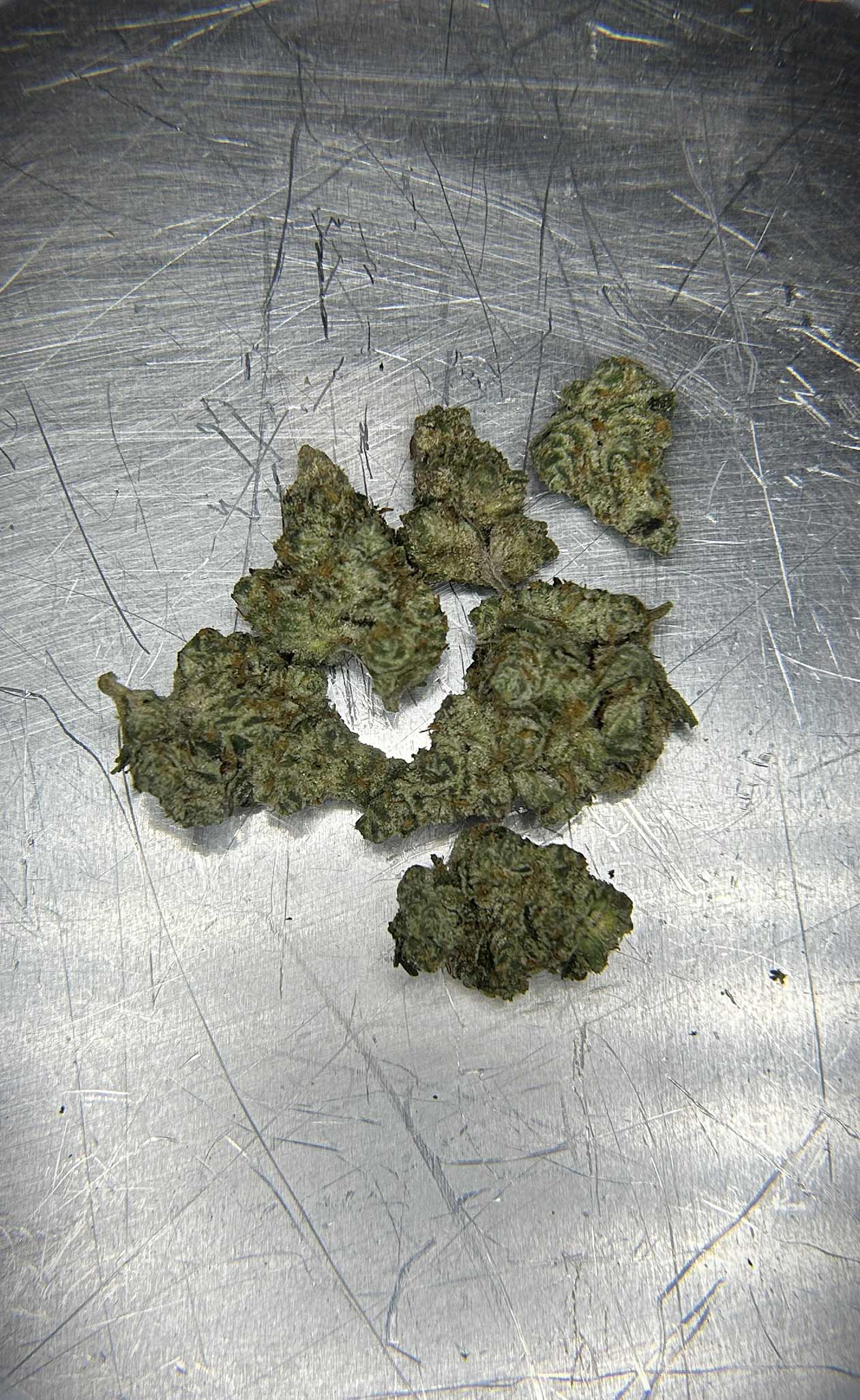
Hand trim
- Sharp lines
- Intact structure and foxtails
- High visible trichomes
- Dense pistils
T-Zero PRO trim
- Similarly sharp edges and structure
- Intact foxtails with no nicks or scarring
- Strong trichome visibility
- Good pistil density
3. Trim quality: what ends up in the trim stream?
The trim collected after your session can tell you a lot. It signals whether you are causing flower damage, over-trimming, or both. Over-trimming lowers the value of your large flower and destroys yield in the process. The good news: these issues are easy to spot by looking for micro-buds mixed into the trim stream.
Experienced hand trimmers know better than to remove healthy flower while snipping. Even so, some micros are always generated through post-harvest. A large volume of micros in the trim stream is a clear indicator of over-trimming, and some equipment struggles to avoid it.
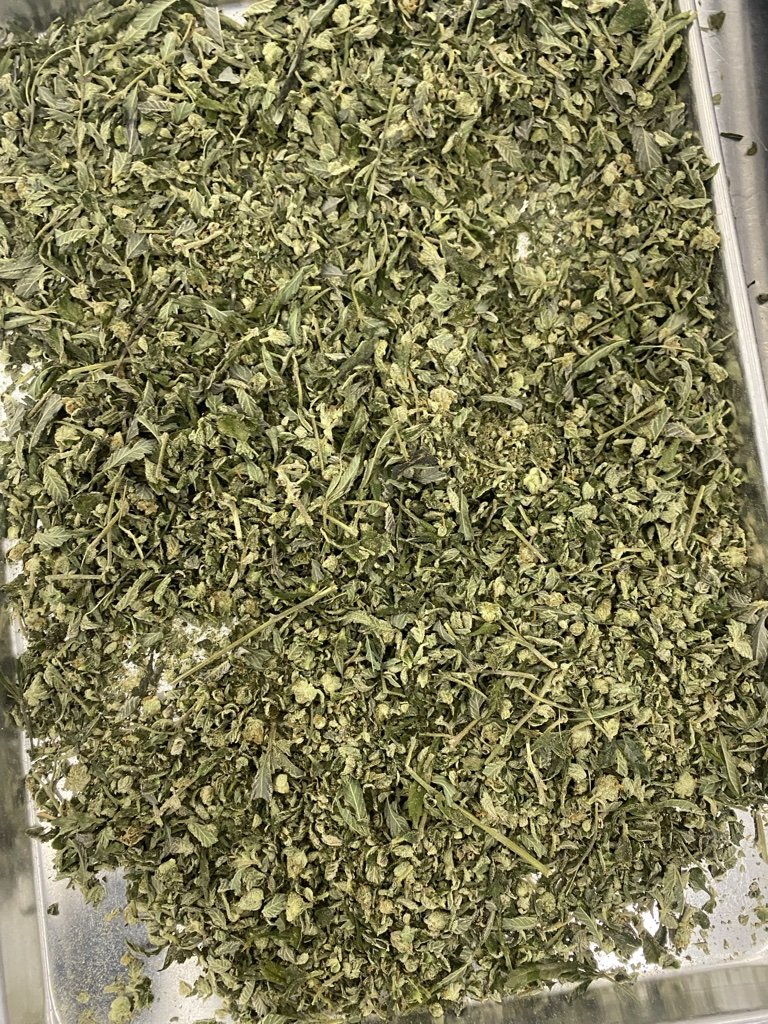
The T-Zero PRO has a wide range of tumbler slot widths, adjustable gaps between the tumbler and blades, and speed adjustments. That gives operators fine control over the cutting allowances. Translation: you can dial in the machine to minimize over-trimming and flower damage.
4. Speed: scaling without turning harvest into chaos
Hand trim can produce beautiful results, but it is slow, hard to staff, and consistency varies with fatigue and turnover. That is why large teams move to controlled, repeatable trimming with automation.
- Hand trimming pace: 1 lb of flower takes 3 to 8 hours per person, depending on cultivar, target spec, and individual.
- T-Zero PRO throughput: up to ~150 lb/hour, allowing trim to keep pace with big harvests while maintaining low labor costs.
5. Cost: the numbers that make the decision obvious
Once you attach dollars to time, the difference between manual labor and automation becomes stark. The T-Zero FAQ includes a clear benchmark for labor cost per pound:
| Cost driver | Hand trim | T-Zero PRO trim |
|---|---|---|
| Labor cost to trim 1 lb | ~$84/lb0.3 lb/hr assumed | ~$0.84/lb150 lb/hr, 5 operators |
| Cost to trim 12,000 lbs/month | ~$1,008,000 | ~$10,080 |
| Monthly labor savings | ~$997,920 | |
Of course, labor savings are only half the equation. The next question is whether the yield gap eats into that advantage. Here are those numbers.
This producer earns about $450/lb for flower and about $75/lb for trim.
| Trim approach | Output | Yield | Weight | Value |
|---|---|---|---|---|
| Hand trim | Flower | 75% | 9,000 lbs | $4,050,000 |
| Trim | 25% | 3,000 lbs | $225,000 | |
| Hand trim total value | $4,275,000 | |||
| T-Zero PRO | Flower | 72% | 8,640 lbs | $3,888,000 |
| Trim | 28% | 3,360 lbs | $252,000 | |
| T-Zero PRO total value | $4,140,000 | |||
| Yield-value gap | $135,000 | |||
Net it out: $997,920 in labor savings minus $135,000 in yield-value loss is $862,920 of monthly bottom-line advantage. Quality flower, less labor, and a meaningful margin lift.
6. Bottom line: hand-trim quality, commercial-scale control
The question is not whether hand trimming can produce beautiful flower. It can, and it will always be the benchmark for finished flower quality and yield preservation. The real question is whether hand trimming can keep up when harvest size, labor cost, consistency, and speed all start pulling against your margins.
In these sample tests, the T-Zero PRO stayed close to hand trim where it matters most: finished flower yield, visible flower quality (structure, pistils, sharp edges), and trichome preservation. On a cultivar like GMO, that is not a small result. Irregular flower exposes weak trimming systems quickly through yield losses and damage. The T-Zero PRO delivered a hand-trim look while keeping yield in a strong range.
Then the business math finishes the story. Hand trim held a small yield advantage in the samples, but automation delivered massive savings in labor, time, and operational complexity. When you are trimming thousands of pounds per month, the question becomes less about whether automation can match every single cut from a skilled hand trimmer, and more about whether it can protect flower quality while giving your team the speed, control, and cost structure to scale.
For operators looking to layer in tighter quality control after the trim stage, the Marvel AI grading system sits downstream of the T-Zero PRO and inspects every flower for size, color, mold, and trim quality before it reaches packaging.
Key terms in this post
- Grade A (bigs)
- Finished flower larger than 1.5 cm (0.6"). Typically the highest-value SKU in a commercial portfolio.
- Grade B (smalls)
- Finished flower smaller than 1.5 cm. Often sold into value SKUs or pre-roll programs.
- Grade C (trim)
- The byproduct stream: sugar leaves, fines, and micro-buds removed during trimming. Usually sold for extraction.
- Foxtails
- The elongated calyx clusters that grow outward from a bud. Easy to nick or scar with the wrong cutting setup.
- Micros / micro-buds
- Very small flower fragments. A large volume of micros in the trim stream is a signal of over-trimming.
- GMO
- A cultivar known for dense, chunky, irregular buds with swollen calyxes. One of the harder strains for any trimming system to handle cleanly.
Frequently asked questions
Does machine trimming match hand-trim quality on dense cultivars?
In the GMO sample tests, the T-Zero PRO produced finished flower that was nearly indistinguishable from hand-trimmed samples: sharp edges, intact structure, strong trichome visibility, and intact foxtails. Hand trim remains the visual benchmark, but a properly tuned T-Zero PRO closes the gap at commercial speed.
How does T-Zero PRO yield compare to hand trim on GMO?
Hand-trimmed samples averaged 75% total finished flower (Grades A and B combined). T-Zero PRO trimmed samples averaged 72%. The 3-percentage-point gap is the trade-off between maximum yield and the labor, speed, and consistency benefits of automation.
How much can a commercial producer save on labor with the T-Zero PRO?
Hand trim at 0.3 lb per hour costs about $84 per pound. T-Zero PRO at 150 lb per hour with five operators costs about $0.84 per pound. At 12,000 lb per month, that is roughly $997,920 in monthly labor savings. After subtracting the $135,000 yield-value gap, the net advantage is about $862,920 per month.
Why is GMO considered a difficult cultivar to trim?
GMO produces dense, chunky, irregular bud shapes tightly packed with swollen calyxes. Its sugar leaves are difficult to remove without taking bud structure with them, which can cause yield loss and visible damage on systems that are not tuned for it.
Run your own sample test, or get a walkthrough of the machine and the labor math for your operation.
Explore the T-Zero PRO