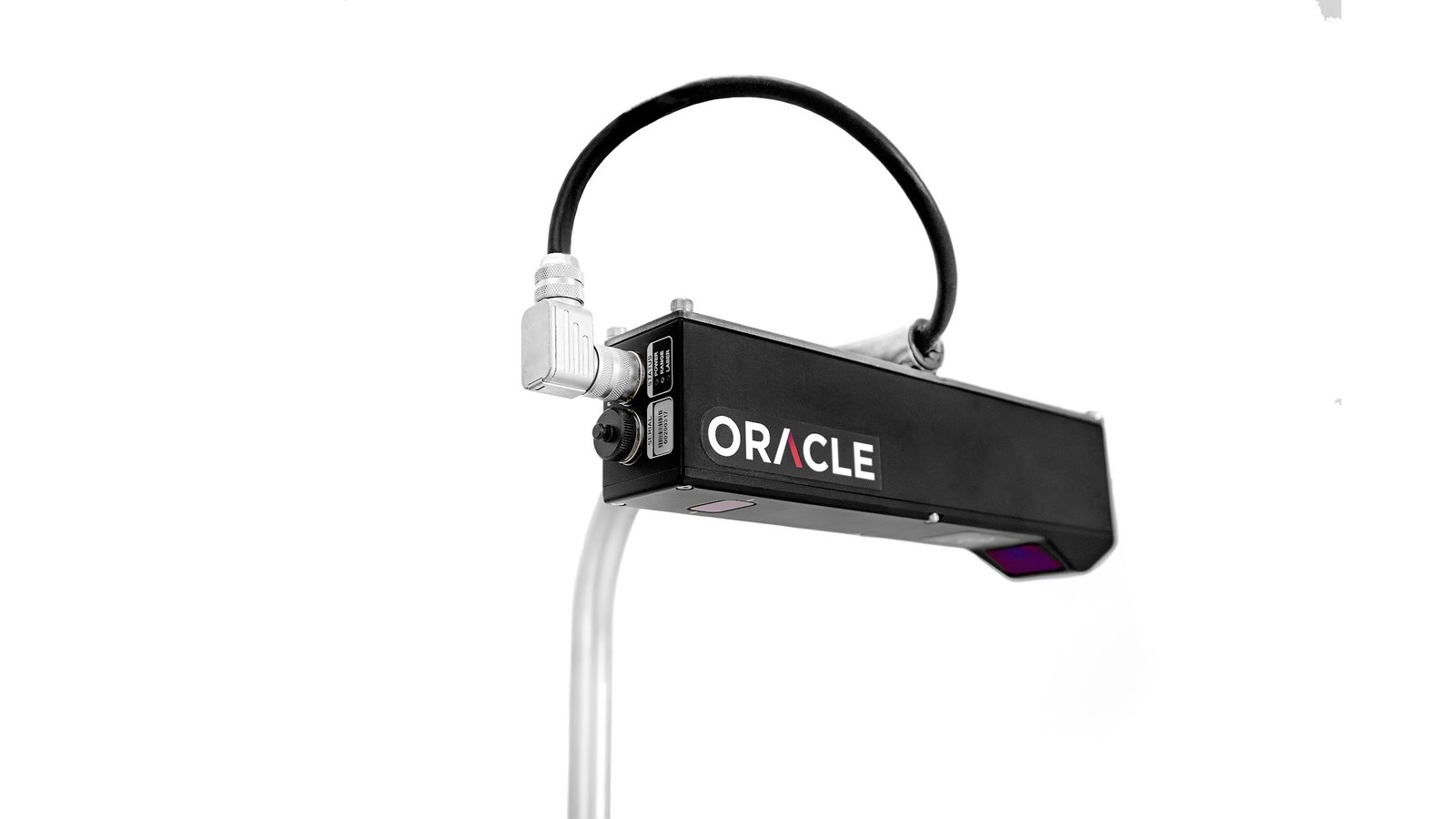
Oracle: The Volumetric Feeding System Behind Your Trim Yield
Everyone benchmarks the trimmer. Almost nobody asks what is putting flower into it, or how evenly. That gap is where yield quietly leaks, and it is the job Oracle was built to do.
Most producers and equipment manufacturers obsess over the trimmer. They benchmark throughput, compare features, and argue about tumbler design and airflow. Twister included. Years ago, we stopped to ask a simpler question that few people ask: what is actually putting flower into the machine, and how evenly is it doing it?
That question matters more than it looks. A trimmer can only protect yield and trim quality when the flower reaching it is in the right condition and the machine is running inside the window it was tuned for. Feed it too much and you under-expose the blades, agitating flower with vacuum and tumbling instead of cutting it, especially with smaller tumblers and large fan leaves. Feed it too little and you waste capacity, and worse, you over-trim. Overtrimming shaves off external bud structure and character, which crushes yield while battering trichomes and lowering quality. As many producers know, this issue compounds significantly if they've had drying trouble and are below their target water activity, making a bad problem worse.
Bouncing between too much feed and too little feed produces inconsistent flower. Some over-trimmed, some under-trimmed, with quality, yield, and throughput yo-yoing all day. The thing standing between those two failure modes is the feed system. On the T-Zero PRO, that system is Oracle.
What Is Oracle?
Oracle is a laser-based volumetric feeding system included with the T-Zero PRO. A laser scanner reads a real-time height profile of the flower on the belt, and the system calculates the cross-sectional area under that profile. Knowing the belt speed, it then determines the instantaneous moving volume of product heading toward the trimmer and meters that volume at a calibrated, constant rate.

That word, volumetric, is the whole point. A standard speed-controlled conveyor runs the belt at a set pace and trusts that the flower is loaded evenly. It rarely is. Operators load in clumps. Some buds pile up, some stretches run empty, and a fixed-speed belt delivers that unevenness straight into the tumbler. Some operators then flatten the clumps by pressing flower into the belt, which adds handling damage the flower never needed.
Oracle measures what is actually on the belt and continuously adjusts the belt speed to hold the volume steady. One operator called it cruise control for the trim line, and the analogy holds. You set the target, and the system maintains it regardless of the bumps in loading, delivering the same volume flower after flower. It is the feed discipline that lets a T-Zero PRO hold its tuned settings shift after shift.
Why Consistent Feed Protects Yield
Yield loss in machine trimming does not always come from the machine being too aggressive. Often it comes from flower spending too much time in the trimmer. When you dial in a T-Zero PRO for a specific cultivar, you are finding the setting where that strain trims clean without over-handling the flower. Hold the feed steady at that setting and the result repeats, all day.
Surge the feed and trim quality drops, because flower exits the machine under-trimmed. That can flatter your trimmer yield on paper, but it pushes the cost downstream into hand-finishing labor. Drop the feed and flower sits too long in the tumbler, comes out over-trimmed, and trichomes and saleable weight walk out the door. It is the same over- and under-trim mismatch that quietly drains margin across a batch when one feed pace gets applied to flower that arrived in different conditions.
Oracle's job is to keep the machine inside that ideal operating window. Once you lock in the sweet spot for each strain, it holds the flow consistent batch after batch, so throughput, yield, trim quality, and cycle times do not yo-yo across the day or between runs. The yield you proved out in your first test run is the yield you get at hour twelve.
This is one reason the T-Zero PRO's yield numbers hold up the way they do: typically a few percentage points below a good hand trim, and consistently 5 to 10% ahead of competing machines at similar quality.
For one of our large Canadian producers, yield ran about 2 to 3% higher with Oracle online than without, which translated to roughly $6,000 a day in added value from yield improvements alone, before counting operational savings or quality gains.
How to Operate Oracle
Oracle is controlled at the T-Zero PRO's HMI. You begin by setting a standard feed speed and fill volume on the conveyor, say 3 to 5 ft/min with a half-full conveyor, and run the trimmer with Oracle turned off. Then turn it on, lock in the volumetric flow at the current rate, and monitor the output. Make small tweaks to the volumetric input on the fly until your desired quality is achieved, and save those settings in your recipe for that strain. When you process that strain again, just select the recipe and hit start.
As you continue improving your process, monitor your yield, ideally hourly, and compare yield and trim quality against your volumetric input rate. Increase that input rate to push yield up, while keeping an eye on your desired level of trim quality. It couldn't be easier.
How It Takes Variables Out of Your Labor Equation
Manual feeding makes line consistency a function of whoever is standing at the conveyor. Pace drifts. Attention fades over a long shift. A fast feeder and a tired one produce two different trim results from the same machine and the same flower. That does not just affect yield. It affects your daily capacity and your operational efficiency.
It is easy to see a 5% swing in throughput across a day from inconsistent feeding, and swings that size add up to real money. You spend extra hours getting through the same batch and put labor into a task better left to automation, when your operators could be focused on keeping the line supplied.
Oracle turns that variability into consistency. Your crew loads the belt, and the system decides how much reaches the trimmer and when. The quality of your run no longer depends on holding a person at a perfect, unwavering pace for hours, a standard no human actually meets.
The labor story for the T-Zero PRO is dramatic on its own. A single line does the work of roughly 300 hand trimmers, at a labor cost near $0.83 per dry pound against roughly $65 for hand trim.* Oracle does not eliminate the people loading the line, but it makes sure the labor savings the machine delivers do not come at the cost of inconsistent output. It protects the yield, quality, capacity, and predictability that make the labor math work in the first place. For the full per-pound benchmark, see the T-Zero FAQ.
- T-Zero PRO throughput: 150 lb/hr
- Average hand-trim rate: 0.5 lb/hr per person
- Hand trimmers to match one line: 150 ÷ 0.5 = 300 people
- Labor cost: ~$0.83/lb (T-Zero PRO) vs ~$65/lb (hand trim)
*Labor figures assume a fully loaded line and a fully burdened hand-trim wage; per-pound costs vary with local wage rates and flower condition.
From Guesswork to a Planned Number
There is a planning benefit that compounds over a season. Because Oracle measures real volume, that data is available to you. Paired with T-Cloud, Twister's online portal, you can see real-time volumetric throughput and daily capacity, which turns how much can we get through this week from a guess into a number you schedule against.
For a perpetual-harvest operation, that is the difference between reacting to the trim room and planning around it. You know your daily capacity, you know your recipes hold, and you can staff and sequence harvests to match instead of throwing temporary labor at whatever came down at once.
On top of planning, you get real operational insight into throughput that you can download and analyze, and use to set additional KPIs for your post-harvest teams. See which shift performs best, which strains caused capacity trouble, and whether specific batches ran slower than others.
The Bottom Line
The trimmer gets the attention, but the feed system decides whether the trimmer ever gets to perform. Oracle keeps the T-Zero PRO inside the window where its yield and throughput numbers are real, consistently, across long runs, without depending on a person to hold a perfect pace. That is how you protect the flower-to-trim ratio you tuned for, and how you keep labor savings from turning into quality drift.
If trimming is the bottleneck in your post-harvest, your feed rate may be a bigger part of the problem than you have been giving it credit for.
Common questions about Oracle
What is Oracle on the T-Zero PRO?
Oracle is a laser-based volumetric feeding system included with the T-Zero PRO. It scans the height profile of flower on the feed belt, calculates the moving volume of product, and meters it toward the trimmer at a constant, calibrated rate.
How is a volumetric feeder different from a speed-controlled conveyor?
A speed-controlled conveyor runs the belt at a fixed pace and assumes even loading. Oracle measures the actual volume of flower on the belt and adjusts to hold that volume steady, so clumps and gaps in loading do not reach the trimmer as surges and lulls.
Does Oracle reduce the number of people needed to run the line?
Oracle does not remove the operators loading the belt. What it removes is the dependence on those operators holding a perfect, unwavering feed pace, which is what protects yield and trim quality across a long shift.
How does feed rate affect trim yield?
Too much feed under-exposes the blades and leaves flower under-trimmed. Too little leaves flower in the tumbler too long, over-trimming it and shedding trichomes and saleable weight. Holding a steady feed at the setting you tuned for each strain keeps yield and quality consistent.
The T-Zero PRO and Oracle are built to keep your tuned yield real across long runs. Take a closer look.
Explore the T-Zero PRO