Soft Finger Trimmer: Trichome Damage, Brittle Leaves, Lost Cannabinoids
How deep silicone-finger contact, combined with dry flower for easy de-leafing, takes trichome heads off the bud, moving cannabinoid-rich resin out of the flower and cutting both aroma and shelf life.
What is soft finger trimmer trichome damage?
Soft finger trimmer trichome damage is the physical loss of glandular trichome heads when flexible silicone fingers rub, bend and compress dry cannabis flower during de-leafing. The cannabinoids and terpenes sit inside those heads. When a head shears off at its stalk or collapses, its resin moves onto fingers, belts and trim instead of into the package, so the loss is mechanical before it is ever chemical.
Soft fingers can still be hard on trichomes. "Soft" describes the finger material, not the force that reaches the resin glands.
The value sits on the surface
Cannabinoids and terpenes are made and stored in the heads of glandular trichomes: resin glands 40–110 µm across, sitting on stalks that narrow where they join the head. [1] Knock the head off and its resin leaves the flower.
Brittle leaf means brittle flower
Soft finger de-leafing runs in the dry room, with humidity lowered during processing, when sugar leaves are at about 10% moisture. Dry leaf snaps more easily. So do the bracts and stalks that carry the trichomes: they sit in the same dry conditions, at the same time.
Soft fingers do not control where the force goes
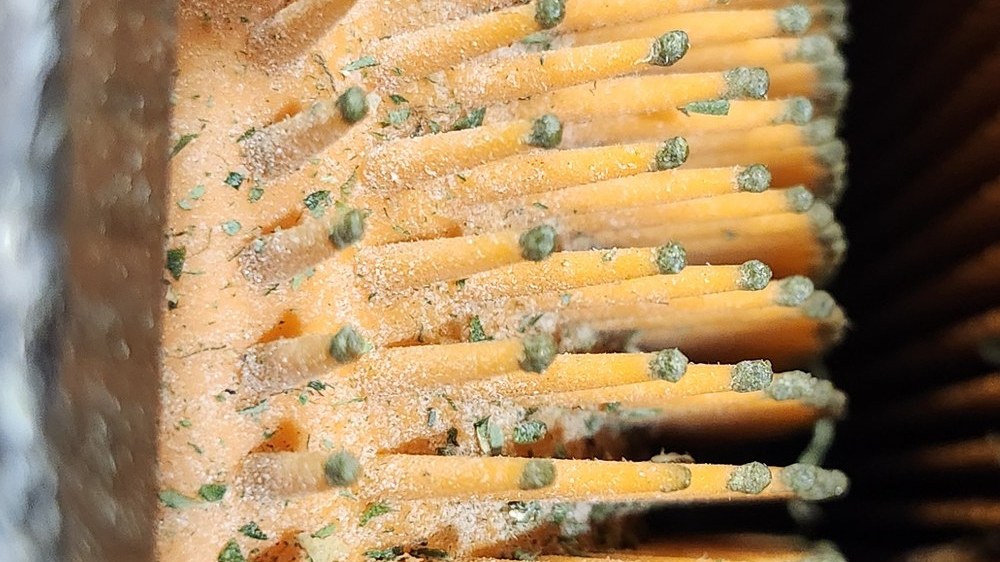
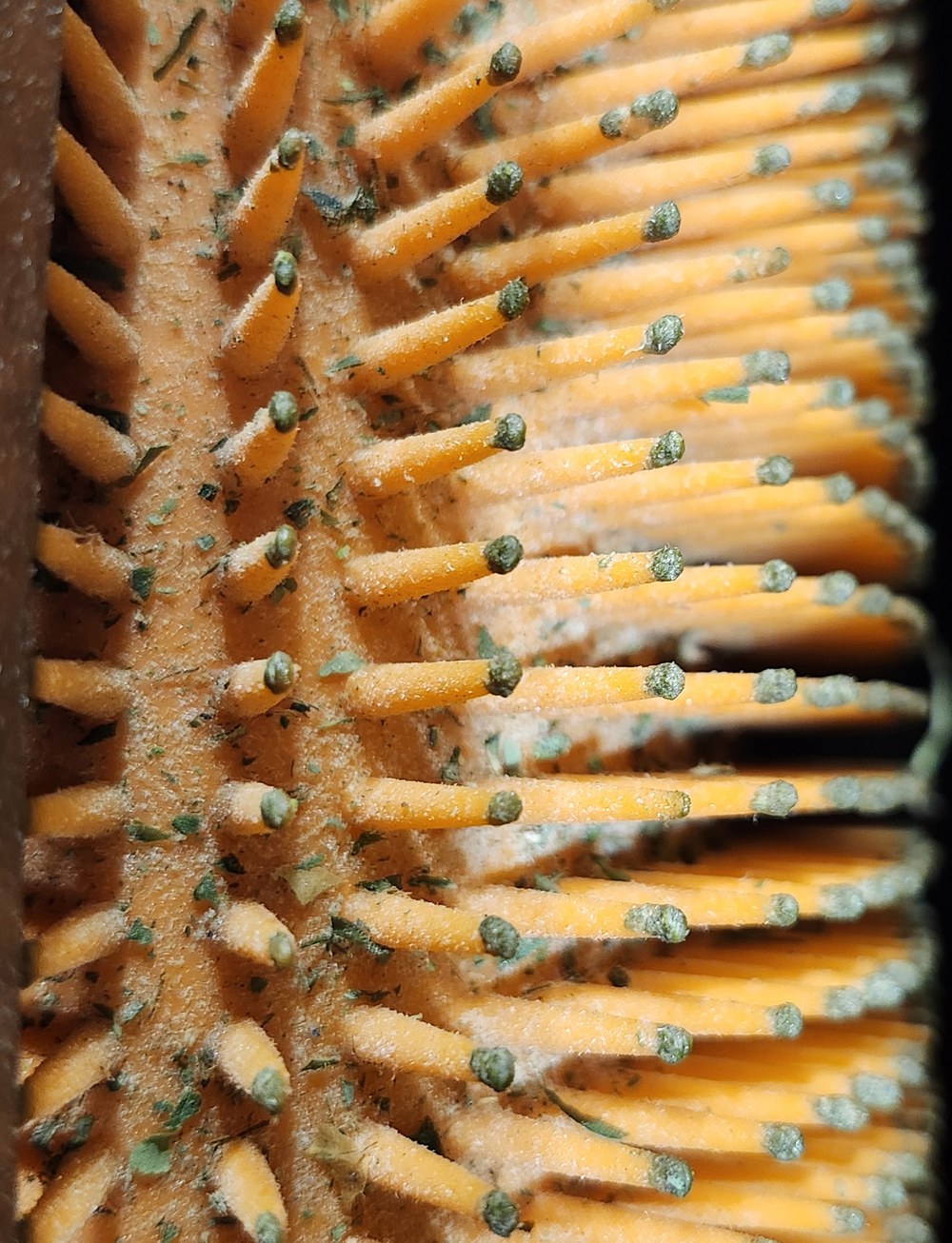
A hand trimmer sees the outer edge of the flower and follows it. Soft fingers push into whatever sits between them, including the gaps between flower lobes. Each finger bends and rubs the trichome stalks, deep inside the flower as well as on the surface, stripping many of the trichome heads (Figure 1). [1] The damage comes from repeated, deep contact.

Lost resin is lost product
A detached, torn or crushed head is not chemically destroyed. Its resin moves onto fingers, belts and trim instead of into the package (Figure 2). Resin that stays exposed ages faster, which can shorten shelf life: more exposed surface formed more oxidation products, and terpenes fell under every condition tested. [2]
The trichome-to-aroma damage pathway
Read across: what happens, why brittle flower is vulnerable, and what leaves the finished product.
| Damage point | What happens | Why brittle flower is vulnerable | Result in flower, cannabinoids and smell |
|---|---|---|---|
| Brittle-leaf operating state | Leaf breaks off more readily, but bracts and trichome stalks in the same dry room also lose flexibility. | Dry plant tissue bends less and breaks more readily. The effect is not limited to leaf. | Greater sensitivity to abrasion, bract chipping and resin shedding before de-leafing is complete. |
| Deep finger engagement | Fingers can enter natural gaps and press between flower lobes, not only brush exposed leaf. | Irregular flower geometry directs local rubbing, bending and compression into inner bracts. | Trichomes can be loaded below the visible surface, so a clean exterior may hide the extent of resin damage. |
| Head detachment or collapse | The glandular head shears off at its junction with the stalk, or the head wall collapses or tears. | The stalk narrows where it meets the head [1]. Rubbing and pressure concentrate load at that junction and on the thin head wall. | Heads move into trim, dust, belts and machine residue. Collapsed heads smear resin across surfaces (Figure 1). |
| Cannabinoid-bearing resin loss | Detached or smeared resin leaves the saleable bud. | Cannabinoids accumulate mainly in stalked glandular heads [1]. Losing a head removes its resin from that flower. | Lower or less uniform cannabinoid content retained. Physical loss comes first. Chemical ageing of exposed resin may follow [2]. |
| Terpene and aroma loss | Volatile aroma compounds escape from ruptured or exposed resin. | More exposed surface speeds loss [2]. Detached heads no longer contribute to bud aroma. | Flatter aroma. Strong odour at the machine may be aroma leaving the product. |
| Repeated passes or contact | Already-contacted surfaces are rubbed and compressed again to remove tucked leaf. | Hidden leaf remains after exposed trichomes have already had a full contact cycle. | Cumulative head loss, resin transfer and aroma loss with each finger. |
| Net effect | Resin leaves the bud mechanically, pass after pass. | Dry-room conditions that make leaf easy to remove make resin easy to remove too. | A clean-looking bud that carries less of what it was grown for. |
Scroll the table sideways on a phone to read all four columns.
Producer checkpoint
Leaf removal is easy to see. Resin loss is not. If you are evaluating any de-leafing or trimming method, including our own T-ZERO and MARVEL AI line, score it on what stays in the flower rather than on how clean the exterior looks.
- Do not score only leaf removal or a smooth exterior.
- Examine bracts under magnification before and after trimming.
- Collect and weigh residue from fingers, belts and trim.
- Pair HPLC cannabinoid testing with GC terpene testing on both the finished flower and the residue.
Per-flower grading records, such as the lot-level data MARVEL AI captures, give you a consistent baseline to compare one method against another rather than relying on how a batch looked on the day.
Terms used in this post
- Glandular trichome
- The resin gland on the surface of cannabis flower. A stalk carries a roughly spherical head 40 to 110 µm across, and the head is where cannabinoids and terpenes are made and stored.
- Trichome head and stalk junction
- The point where the stalk narrows to meet the head. It is the weakest point in the structure, so rubbing and compression concentrate there and shear the head off.
- Bract
- The small leaf-like structure that encloses the flower's reproductive parts. Bracts carry the highest density of glandular trichomes on the plant, which is why bract edges show the most damage under magnification.
- De-leafing
- Removing sugar leaf from the bud without cutting into the flower itself. Soft finger systems do this by pushing flexible silicone fingers through the flower rather than by cutting.
- Sugar leaf
- The small trichome-covered leaves growing out of the bud. Removing them is the goal of de-leafing, and their moisture content sets the operating conditions for the whole batch.
Frequently asked questions
Does soft silicone mean trichomes are protected?
Not on its own. "Soft" describes the finger material, not the force that reaches the resin glands. A flexible finger can still bend, rub and compress a trichome stalk enough to shear the head off, and it can do so repeatedly across one pass.
Why does dry flower make trichome loss worse?
De-leafing runs when sugar leaves are at roughly 10% moisture, because dry leaf snaps off readily. The bracts and trichome stalks sit in the same dry room at the same time and lose flexibility along with the leaf, so the conditions that make leaf easy to remove make resin easy to remove too.
Can you see trichome damage by looking at the bud?
Often not. Fingers can press into gaps between flower lobes and load trichomes below the visible surface, so a bud with a clean exterior can still have lost a significant share of its heads on inner bracts. Magnification is required to see it.
Is detached resin chemically destroyed?
No. A detached, torn or crushed head is still resin. It has simply moved onto fingers, belts and trim instead of into the package. Resin left exposed then ages faster, because more exposed surface produces more oxidation products and terpene levels fall under every storage condition tested.
How should a producer test for this?
Examine bracts under magnification before and after trimming, collect and weigh the residue from fingers, belts and trim, and run HPLC cannabinoid testing alongside GC terpene testing on both the finished flower and the residue. Scoring leaf removal alone will not show it.
If the room smells strongest at the machine rather than in the jar, that aroma is not a sign the process is working. It is product leaving the flower.
Book a trim quality assessment
We will look at what your current process leaves in the flower, not just what it takes off.
Book an assessmentSources
[1] Punja ZK, Sutton DB, Kim T (2023). Glandular trichome development, morphology, and maturation are influenced by plant age and genotype in high THC-containing cannabis inflorescences. Journal of Cannabis Research 5:12. doi:10.1186/s42238-023-00178-9
[2] Milay L, Berman P, Shapira A, Guberman O, Meiri D (2020). Metabolic profiling of cannabis secondary metabolites for evaluation of optimal postharvest storage conditions. Frontiers in Plant Science 11:583605. doi:10.3389/fpls.2020.583605